
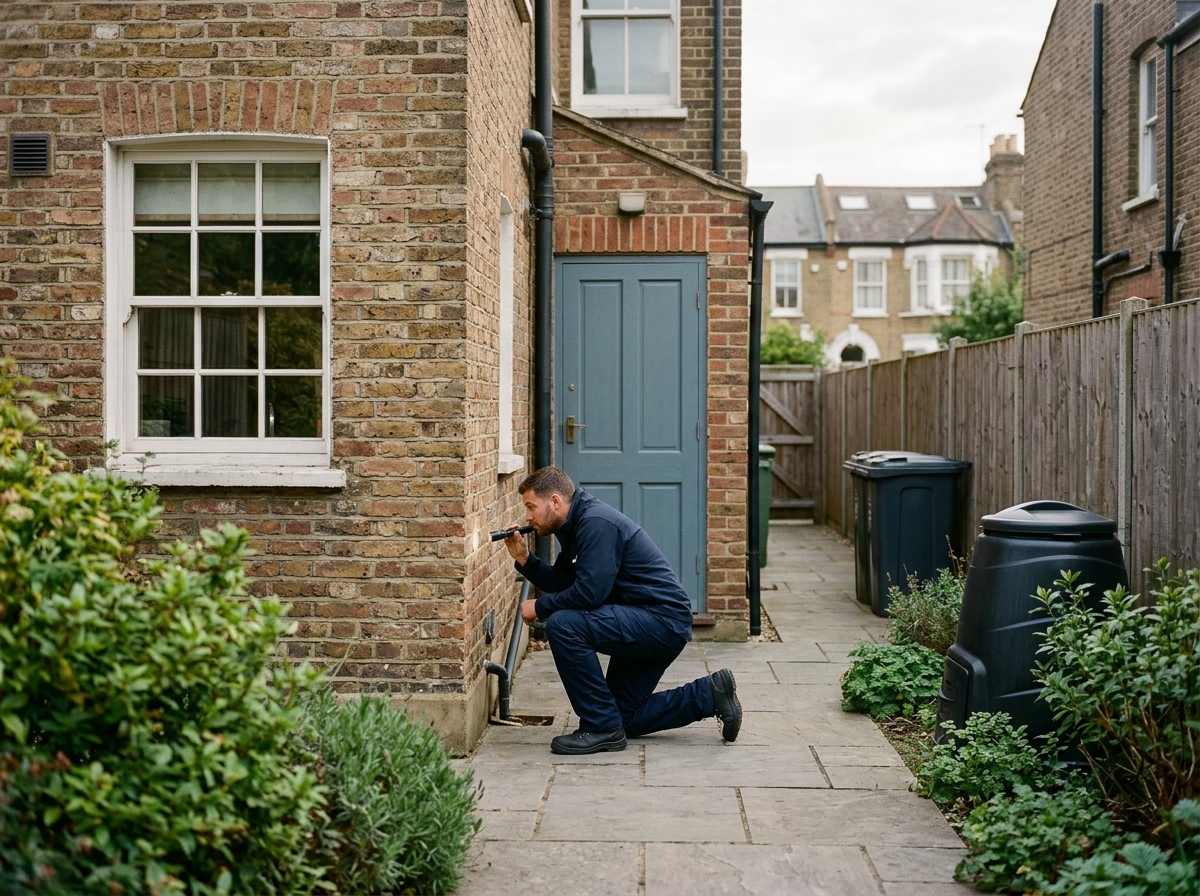
Why rats come indoors in winter
Rats and mice are the rodents people in the UK come across most often, and the climate here suits them. Rats usually live under buildings, in refuse heaps and in sewers. Mice prefer more sheltered spots. When the weather turns cold, both head indoors looking for food and shelter.
Homes with gardens are especially attractive. And as rodents become more common in urban areas, a home in the middle of North London and East London is no exception.
Because rats and mice are nocturnal and choose nesting spots where they won’t be found, you rarely see them first. Most people notice the noise at night, or the damage, long before they spot the animal itself.
How fast do rats breed?
Fast enough that waiting to see if the problem goes away is the most expensive option. These are the figures we work from:
- young in a single litter
- 8–12
- litters a year
- Up to 7
- rats in a year from one breeding pair
- 2,000+
In other words, one breeding pair of rats can lead to more than 2,000 in a single year. That is why fast, effective treatment matters: it stops a small problem from multiplying.
Why it’s worth taking seriously
- Health. Rodents carry diseases including salmonellosis, meningitis and endocarditis.
- Damage. They burrow, and they gnaw constantly on wood, cables and pipes, which can cause structural damage to buildings and sewers.
- Business premises. In shops and offices, rodents threaten staff health and can do costly damage to telephone and computer systems.
Six ways to keep rats out of your house
None of these needs special equipment. Together they remove the food, shelter and easy access that draw rodents to a property in the first place.
1. Keep entrances and exits clear of clutter
Rodents look for shelter and like to nest where they won’t be disturbed. Piles of boxes, bags and garden junk beside your doors give them cover right next to the way in. Keep doorways, side returns and back steps clear.
2. Keep compost heaps well away from the house
A compost heap offers warmth and a steady supply of food scraps. If you have one, site it as far from the building as your garden allows, so it doesn’t become a stepping stone to your back door.
3. Store all food in tightly sealed containers
Rats and mice come indoors searching for food. Packets, open bags of pet food and loose bread are an open invitation. Decant dry goods into tightly sealed containers and don’t leave food out overnight.
4. Seal your rubbish and keep it away from the house
Bin bags left by the back door are one of the easiest meals a rat will find. Keep rubbish tightly sealed, use lidded bins and store them away from the walls of your home.
5. Feed the birds away from your home
Spilled seed under a bird feeder feeds rodents as well as birds. If you feed birds, do it away from the house so any food that falls doesn’t draw rodents towards the building.
6. Block off holes in external walls
Food and shelter bring rodents close; a gap lets them in. Check outside walls for holes and openings and get them blocked off. Once an infestation has been cleared, LPC can offer a separate proofing survey to find the weak spots for you.
What to do if rats are already inside
Prevention keeps new rodents out. It won’t remove the ones already nesting in your loft, under the floor or behind the kitchen units, and because they breed so quickly, every week counts. Signs worth acting on include scratching or scurrying at night and fresh gnaw marks on wood, cables or pipes.
This is where a qualified technician makes the difference. When LPC treats rodents, the treatment is tailored to your property rather than copied from a template:
- Inspection. Lewis checks inside and outside for the weak spots where rodents are getting in.
- Treatment. Bait and traps are set to suit the building and the size of the problem.
- Follow-up. Return visits go in the diary, and you’re kept updated on any further measures the property needs.
- Proofing. Once the infestation has been cleared, a separate proofing survey can be offered where it’s needed, so they can’t simply walk back in.
“Identified our weak spots of where vermin could come from inside and outside… Laid out the bait and traps – and a few days later – he found that we had 3 small rats. When we thought we only had 1 mouse.”
For urgent cases, LPC can arrange for a technician to reach your home or business within 24 hours of your enquiry. Read more about our rat and mouse control service, or tell us what you’ve found: what you’ve seen or heard, where it is and how long it’s been going on.
A note for businesses
Under health and safety legislation, pest control is a legal requirement for businesses. LPC works with food processing and manufacturing, pharmaceuticals, supermarkets, pubs, clubs, bars and offices across North and East London, with reactive, proactive and preventative pest control. Sealed food storage, sealed rubbish and blocked external holes matter just as much on commercial premises as they do at home.